SHOPS
How to start an apparel business
The first steps to start a small clothing brand, what costs money at the start, and an online store you can copy.
THE EXAMPLE ON THIS PAGE
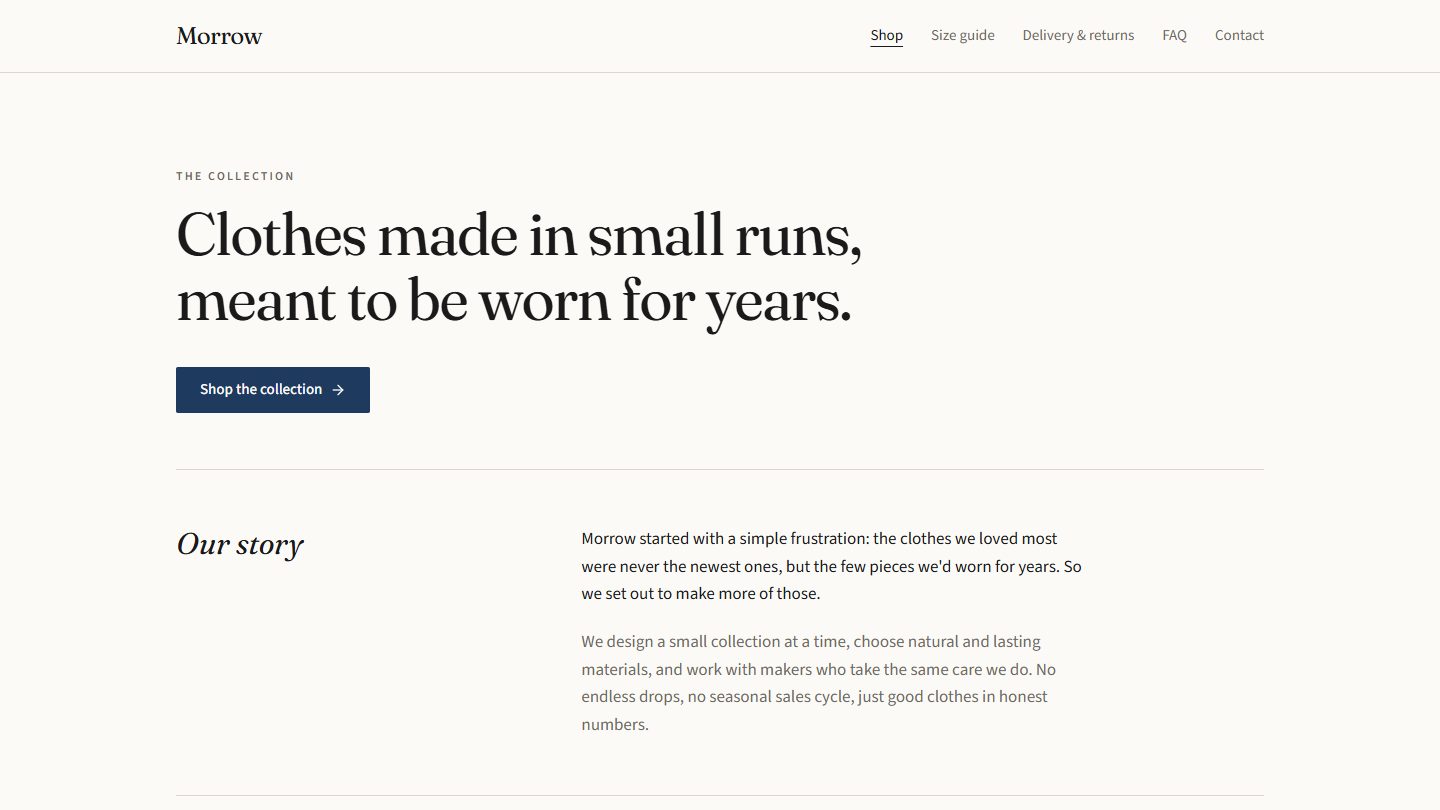
Online store for a small clothing brand. A small clothing brand's store with a collection page, product pages with sizes and a size guide.
- TIME TO A FIRST VERSION
- About 3 minutes (167 seconds, one build)
- COST TO A FIRST VERSION
- 1 build (a Free account has 3)
- DIFFICULTY
- Easy
- BEST FOR
- People starting a clothing or t-shirt brand
How to start an apparel business: the first steps
- 1.Know who you dress. A clear audience and style matters more than the first products. Say who the clothes are for and why they would choose you.
- 2.Choose how the clothes are made. Print-on-demand needs no stock; a small run from a manufacturer gives more control and better margins but ties money up. Order samples before you sell.
- 3.Get sizes and materials right. Write down each product's material and care, and make a size guide from the real measurements. Wrong sizes are the main reason for returns.
- 4.Set delivery and returns. Decide how you ship, how long it takes and how returns work. Say it plainly on every product page.
- 5.Open a store of your own. A store with your story, the collection, sizes and buy buttons keeps the brand and the customers yours, next to any marketplaces you use.
WHAT COSTS MONEY AT THE START
- Samples and the first run of stock, unless you print on demand
- Product photos
- Packaging and shipping
- A website: the example on this page takes one build on Conquer
WHAT YOU NEED
- A supplier or print-on-demand service
- A size guide from real measurements
- A way to take payments
- A store with product pages and buy buttons
Amounts are left out on purpose: they differ by country and change. Rules on registration, insurance and licences differ by place too, so check your own.
The problem
A new clothing brand needs a place that shows the collection, the sizes and the story, without paying a marketplace on every sale.
“I have a couple of friends for instance who own a vintage clothing/furnishings store and do MOST of their business posting items on Instagram, getting DM'd from people wanting to purchase, and then handling payments and pick up or delivery off of the platform.”
How many customers look for this
Searches by people who want to buy what this business sells: a sign of demand from your future customers.
| SEARCH | PER MONTH |
|---|---|
| sustainable clothing | 12,100 |
| small clothing brands | 880 |
Average monthly Google searches in the United States, from OpenSEO (November 2026). A "near me" search counts every town, so one town sees a small share of it. Similar searches overlap, so do not add them up.
What people use today
- Shopify. Hosted online store builder with monthly plans and apps.
- Printful. Print-on-demand service that makes and ships each product to your customers, so you hold no stock; it connects to online stores.
- Etsy. Marketplace that brings buyers and charges a fee per listing and per sale.
Should you build this?
REASONS TO BUILD IT
- Your own store keeps the brand and the customer list yours.
- Print-on-demand lets you start without stock.
REASONS NOT TO
- Clothing is crowded: the brand and the audience matter more than the shop.
- Returns for the wrong size cost money.
How we built it, and what broke
PROMPT 1
An online store for a small clothing brand. The home page has a short brand story and a collection of eight products with a plain placeholder box where my own product photo will go, a name and a price. Each product opens a page with a description, the material, the sizes to choose from and a buy button. Add a size guide table, delivery and returns information, answers to common questions and a contact form.
Built first time in 167 seconds with no repair, in 14 files and Conquer's Editorial style: a home page with the brand story and the collection, a page per product with material and sizes, a size guide, delivery and returns, common questions and a contact form.
- The brand, products, prices and story are placeholders marked with notes.
- The buy button checks that a size is chosen and then says ordering opens soon: ask Conquer to connect it to your Stripe prices before selling.
Where to find the first customers
- Instagram and TikTok. Show the pieces worn by real people, with the store link.
- Local markets and events. Sell in person and hand out cards for the store.
Last updated . Competitors and market notes are a starting point for your own research, not advice.
More business ideas
- SHOPSSmall dropshipping storeA store for one kind of product that ships straight from the supplier, with honest delivery times and a clear returns policy.MEDIUM TO BUILD · WORKING EXAMPLE
- SHOPSOnline shop for handmade jewelryA jewelry maker's shop with collections, product pages with materials and a form to book a permanent jewelry event.EASY TO BUILD · WORKING EXAMPLE
- SHOPSOnline shop for handmade candlesA candle maker's shop with scents, product pages with burn time and wax, and a form for custom or wholesale orders.EASY TO BUILD · WORKING EXAMPLE